Digital Downloads Versus Printed Patterns
A customer has found your crocheted dragon, fallen in love with the photos, and is ready to buy the pattern. The choice between digital downloads versus printed patterns now shapes what happens next: a fast file delivery, or a physical package that must be printed, packed, and shipped. Neither format is automatically better. The right one depends on the business you want to build and the experience you want your customers to have.
For most amigurumi designers, patterns are intellectual property first. Your instructions, stitch counts, construction choices, and character design are the product. That makes digital delivery a natural fit. But printed patterns can still earn a place in a thoughtful product line, especially when they support a premium offer or a specific customer need.
Digital Downloads Versus Printed Patterns: The Core Difference
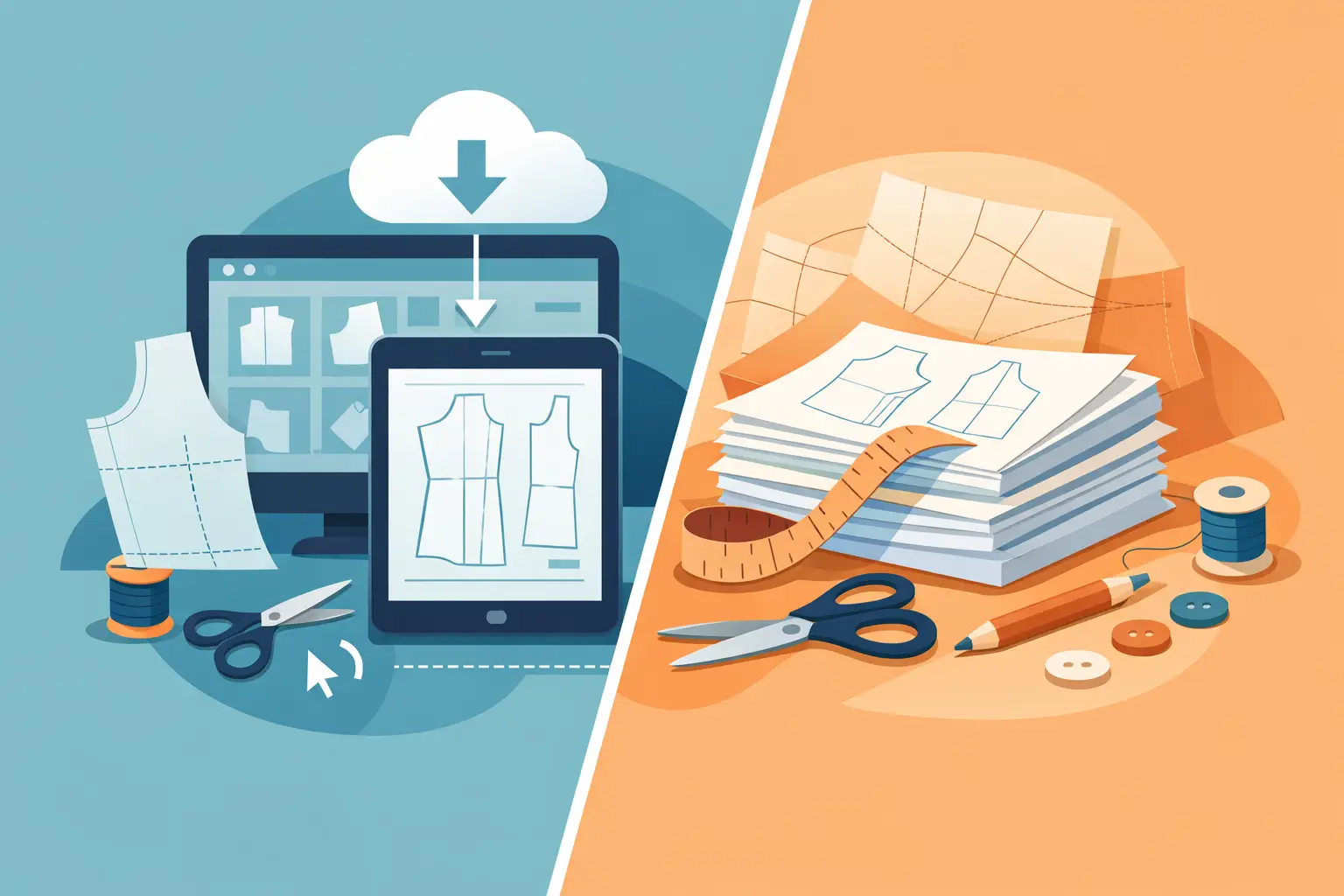
A digital pattern is a file the customer receives after purchase, usually as a PDF. It can be stored on a phone, tablet, computer, or printed at home. A printed pattern is a physical item you create or outsource, then mail to the buyer.
That sounds simple, but the operational difference is substantial. Digital products separate revenue from your physical capacity. You can sell the same finished PDF to one customer or one thousand customers without buying more paper, standing at a printer, or making another trip to the post office.
Printed patterns add materials, fulfillment, inventory, postage, and delivery timelines. They may also add perceived value. Some crocheters genuinely prefer marking rounds by hand, keeping patterns in binders, or receiving something tangible from an independent maker. The question is whether that preference is strong enough within your audience to justify the extra work and cost.
Why Digital Downloads Fit a Scalable Pattern Business
Digital downloads give a crochet designer room to operate like a publisher. Once your pattern is written, tested, photographed, formatted, and exported, it can be delivered immediately across time zones. A customer in California and a customer in Australia can both start their project minutes after checkout.
That immediate access matters for amigurumi buyers. Many purchase because they are excited to make a character right away, perhaps for a birthday, a craft market, or a weekend project. Waiting several days for mail introduces friction at the exact moment their motivation is highest.
Digital delivery also makes updates practical. Maybe a tester catches a confusing instruction, a round count needs clarification, or you want to add a yarn substitution note. With a digital pattern, you can revise the source file and provide the corrected version to future buyers. Your product can improve as your catalog grows.
Translation is another major advantage. If you want to serve crocheters beyond English-speaking markets, a digital workflow makes multilingual editions far more realistic. You can manage versions, preserve consistent visuals, and export polished PDFs without maintaining separate stacks of printed inventory in every language.
Most importantly, digital patterns protect your creative energy. Time spent assembling envelopes is time not spent designing your next character, reviewing tester feedback, improving your product photography, or building a collection customers recognize.
Digital does not mean low-value
A PDF should not feel like an informal document copied out of a notebook. Customers pay for clarity, confidence, and a successful finished project. A strong digital amigurumi pattern includes clean sectioning, consistent abbreviations, clear materials, round-by-round instructions, assembly guidance, and useful photos or diagrams.
Visual planning raises the standard further. When you can inspect a character's components before publishing, you are more likely to catch proportion or construction issues before they become customer questions. That is where a creator-focused workspace such as Amigurumake can help designers write, see, export, and prepare a pattern for sale in one workflow.
The Real Costs Behind Printed Patterns
A printed pattern can feel more premium because it is physical, but premium is not the same as profitable. Before offering print, calculate more than the paper price.
Your cost includes ink or professional printing, paper quality, folding or binding, packaging, labels, postage, payment processing, replacement shipments, and the value of your own fulfillment time. If you keep stock on hand, you also risk printing too many copies of a design that sells slowly or needs a correction.
Shipping creates customer-service obligations, too. Digital buyers may need help locating a file. Printed-product buyers may report delays, damaged envelopes, lost packages, incorrect addresses, or customs fees. These are manageable issues, but they change the kind of business you run.
Printed patterns can make sense when they are part of a higher-margin product. For example, a special-edition booklet, a workshop kit, a curated seasonal bundle, or a signed release may justify physical production. In those cases, print is not simply an alternate delivery method. It is part of a deliberately designed offer.
If you sell printed instructions alone, price them for the full cost of fulfillment. Do not absorb labor and postage just because a competitor's digital PDF is priced lower. They are selling a different format with a different cost structure.
Think About How Your Customers Actually Crochet
Customer preference should influence the decision, but it should not override the economics of your business. Many crocheters who say they prefer printed patterns are comfortable printing a PDF themselves. They want paper in their hands, not necessarily a package from your studio.
A well-designed PDF supports both habits. Customers can annotate it digitally, zoom into close-up photos, search for terms, or print only the pages they need. That flexibility is hard for a printed booklet to match, especially for detailed amigurumi construction.
There are exceptions. Your audience may include shoppers who value gift-ready products, attend in-person events, or are less comfortable managing files. If that is a meaningful part of your market, offer print selectively rather than turning every release into a shipping operation.
A useful approach is to make digital your standard format and reserve print for events, limited editions, or bundles where the physical experience is central. You preserve scale while still learning whether your buyers will pay for a tangible version.
Build for Accuracy Before You Choose a Format
Format cannot rescue an unclear pattern. Whether customers receive a download or a mailed booklet, they need instructions that have been validated before launch.
Start with a complete writing process. Define each piece, track stitch counts, describe shaping consistently, and make assembly steps easy to follow. Then use testers to identify the places where a designer's assumptions become a customer's confusion. A finished sample proves the design can be made. Testing proves the instructions can be followed.
For complex toys, visualizing components before publication can prevent expensive mistakes. A round count that does not add up can be corrected in a PDF in a minute. The same issue in a printed batch can mean wasted inventory, customer frustration, and an awkward correction insert.
This is one reason digital-first publishing is a smart default, even for designers who eventually want print. You can validate the product, refine the instructions, and establish demand before committing cash to physical stock.
Choose the Model That Supports Your Next Stage
If you are publishing your first pattern, digital delivery removes barriers. You can focus on writing a professional PDF, gathering feedback, setting a price, and learning what customers respond to. There is no need to turn a creative launch into a logistics project.
If you already have a reliable catalog and repeat buyers, test a printed offer with a narrow purpose. Bring a small batch to a craft event. Create a holiday bundle. Offer a printed edition for a bestseller with enough demand to justify production. Track the margin, fulfillment time, customer questions, and repeat purchase behavior before expanding.
The best model may change over time. A digital-first catalog can fund a later physical collection. A printed workshop handout can introduce customers to your broader download library. What matters is that every format supports the way you want to create and sell.
Your next pattern deserves a delivery method that keeps the focus on the character you designed, the instructions you refined, and the customers who cannot wait to make it.